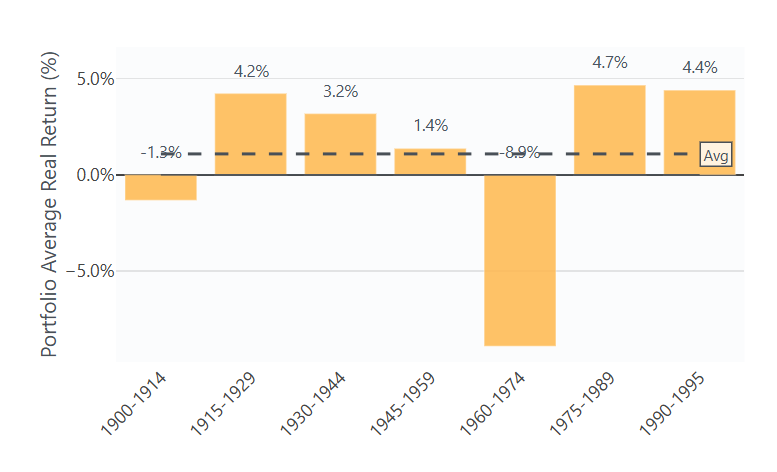
For Premium accounts, Bellavia.app includes demo market data covering the general US and UK markets from 1900 to 2020. While this dataset is adequate for many analyses, there's room for improvement if you need more comprehensive or specialized data.
One of the most powerful features of the Bellavia simulator is its ability to accept custom data uploads. This means you can use your own historical data to analyze savings or retirement portfolios with precision tailored to your specific needs.
Recommended Data Sources
Here are some of the most reliable sources for historical market data, ranging from free academic resources to commercial datasets:
| Dataset | Description | Coverage | Access |
|---|---|---|---|
| Shiller (Irrational Exuberance) Data | Monthly U.S. stock (S&P Composite), bond yields, CPI, and real total returns. Foundation for most Safe Withdrawal Rate (SWR) studies. | U.S., 1871–present | Robert J. Shiller, Yale University |
| Jordà–Schularick–Taylor (JST) Macrohistory Database | Comprehensive dataset for 18 advanced economies including equities, bonds, housing, inflation, and GDP. | 1870–2020+ | Macrofinancial History Database (NBER WP 22743) |
| Dimson–Marsh–Staunton (DMS) Global Investment Returns Database | Annual global stock, bond, and cash returns across 35 countries. Published in the Credit Suisse Global Investment Returns Yearbook. | 1900–present | Credit Suisse Research Institute (Commercial) |
| Global Financial Data (GFD) | Commercial dataset with extensive historical series on global equities, bonds, commodities, and foreign exchange. | Global, multi-century | globalfinancialdata.com (Commercial) |
| Morningstar / Ibbotson SBBI | U.S. stock, bond, and T-bill returns since 1926. Another foundational source for SWR studies. | U.S., 1926–present | Morningstar SBBI Yearbook (Commercial) |
| Bank of England Millennium of Macro Data | U.K. interest rates, inflation, GDP, and asset returns with exceptional historical depth. | U.K., 1000–present (select series) | Thomas & Dimsdale (2017), BoE Dataset |
| OECD & IMF International Financial Statistics | Cross-country macroeconomic and financial indicators commonly used for recent-decade calibrations. | 1960–present | OECD | IMF |
Beyond Standard Market Data
The flexibility of Bellavia extends beyond traditional market indices. You can use virtually any type of historical data that suits your analysis needs:
- Personal data in any currency and timeframe
- Alternative assets such as real estate prices, precious metals, or commodities
- Custom constructs built from your own research or proprietary sources
The key requirement is that your data represents any two investable assets with historical price information. This opens up endless possibilities for portfolio analysis beyond the major stock and bond indices.
Data Requirements
For your data to work properly with Bellavia, it must meet these specifications:
- Total Returns: Data must include all value derived from holding the asset, such as dividends for stocks and coupons for bonds, not just price appreciation
- Annual frequency: You need one data point per year for each asset
- Nominal values: Price series should reflect actual market prices without adjustment
- Inflation series: Required to convert nominal prices into real (inflation-adjusted) prices
- Cash returns: Include a nominal rate of return for cash holdings
How to Upload Your Data
Once you've compiled your historical price series, follow these steps to upload them to Bellavia:
- Format your data as a CSV file with exactly 5 columns:
Year,Equity_TR,Bond_TR,Cash_TR,CPI - Download the sample CSV file from the Bellavia settings page to use as a template
- Open the sample file in your preferred spreadsheet application
- Replace the sample data with your own historical data
- Save the file as CSV format
- Upload it through the Bellavia settings page (accessible from the upper-right menu on the homepage)
Conclusion
With access to high-quality historical market data and Bellavia's flexible upload capabilities, you can conduct sophisticated portfolio analyses tailored to your specific circumstances. Whether you're using freely available academic datasets or constructing your own custom data series, the platform provides the tools needed for rigorous financial planning and retirement analysis.
Discussion (0)
Join the conversation
Log in to commentNo comments yet. Be the first to share your thoughts!